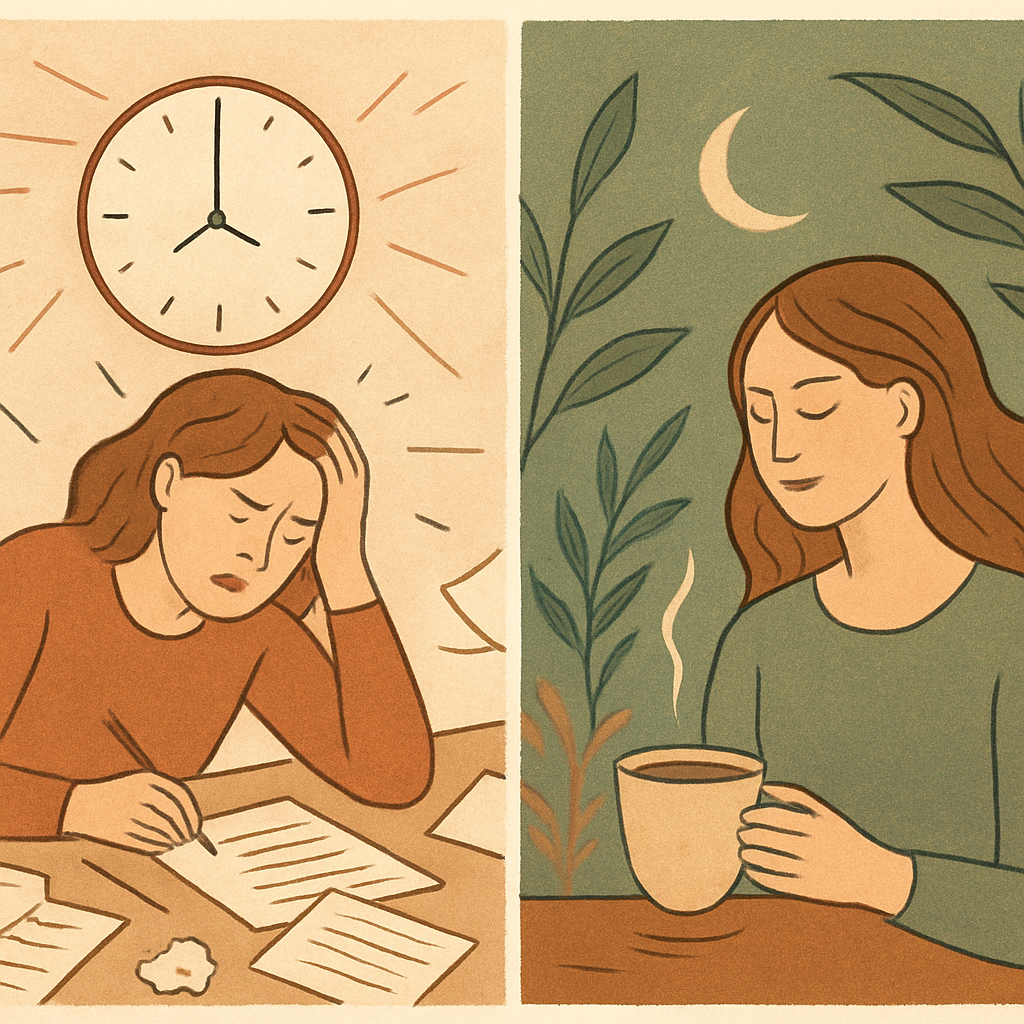
What cortisol is supposed to do
Cortisol is your primary stress hormone, released by the adrenal glands on a daily rhythm orchestrated by the brain. In a healthy pattern, it rises sharply in the first hour after waking — the "cortisol awakening response" that gives you momentum — and then declines steadily across the day until it bottoms out at night, clearing the way for sleep and repair. It mobilizes energy, regulates blood sugar and blood pressure, and dampens inflammation. In short bursts, it is exactly what you want.
Cortisol is not the problem. Cortisol that never gets the signal to come down is the problem.
The most common high-cortisol symptoms
Chronically elevated or dysregulated cortisol tends to produce a recognizable constellation. You will rarely have all of these, but if several are familiar, the pattern is worth taking seriously.
- Wired but tired. Exhausted all day, then a second wind at night when you finally want to sleep — a sign the curve is inverted.
- Trouble falling or staying asleep, especially waking around 2 to 4 a.m. with an alert, busy mind.
- Stubborn weight, particularly around the midsection, as cortisol promotes central fat storage and drives cravings for quick energy.
- Cravings for sugar, salt, or caffeine, the body's attempts to prop up energy and a flagging stress response.
- Feeling on edge, irritable, or unable to switch off, with a low threshold for frustration.
- Frequent minor illness, since sustained cortisol suppresses immune function.
- Afternoon energy crashes that you patch with more caffeine, deepening the cycle.
Many of these overlap with the picture of persistent tiredness and with brain fog, because a dysregulated stress axis touches sleep, energy, and cognition all at once.
Why modern stress keeps it elevated
The stress response evolved for threats that were intense and brief. Modern stressors are mild and unrelenting: the open inbox, the financial low hum, the news cycle, the social comparison, the perpetual sense of being slightly behind. None of these resolve cleanly, so the body never receives the all-clear that would let cortisol fall. Add late screens that suppress the evening wind-down, caffeine that artificially extends activation, and irregular sleep that scrambles the timing signal, and you have a recipe for a flattened, dysregulated curve.
Crucially, the body cannot tell the difference between a real threat and a perceived one. A tense email and a charging animal produce broadly the same chemistry. This is why managing cortisol is less about eliminating stressors — often impossible — and more about reliably signaling safety to the nervous system, which is the subject of the companion guide on how to calm your nervous system.
The Ayurvedic view: Pitta, Vata, and ojas
Ayurveda did not measure cortisol, but it described the syndrome precisely. The driven, intense, can't-stop quality of chronic stress is aggravated Pitta — heat, sharpness, and ambition turned corrosive. The wired, anxious, sleepless, scattered quality is aggravated Vata. And the end state — depletion, frequent illness, loss of resilience and glow — is the loss of ojas, the subtle essence Ayurveda considers the basis of immunity, vitality, and steadiness.
This framing is useful because it points to what may help. You do not rebuild ojas by pushing harder. You rebuild it by doing less, sleeping deeply, eating nourishing warm food, and protecting your rhythms — exactly the opposite of what a high-Pitta, high-cortisol person instinctively wants to do. Knowing whether you run more Pitta or more Vata helps you tailor the approach, and you can take the dosha quiz to find out.
A gentle recovery approach
The defining principle of cortisol recovery is gentleness. An over-activated system does not respond well to more intensity, even well-intentioned intensity like punishing workouts or rigid fasting. It responds to consistent signals of safety and to the restoration of rhythm.
Cortisol recovery checklist
High intensity versus gentle: what helps when cortisol is high
| Approach | Effect on a dysregulated system |
|---|---|
| Long, intense workouts | Can add stress load and spike cortisol further |
| Walking and gentle yoga | Lowers activation, supports recovery |
| Strict fasting | Often a further stressor when depleted |
| Regular warm meals | Stabilizes blood sugar and reassures the body |
| More caffeine | Extends activation, worsens the curve |
| Adaptogens like ashwagandha | May support the stress response over time |
On that last point, ashwagandha is the herb most associated with stress-axis support in Ayurveda; the practical guide on how to take ashwagandha covers timing and dosing.
What to do tomorrow morning
- Get natural light into your eyes within half an hour of waking. This sharpens the morning cortisol peak so the curve can fall properly later.
- Eat or drink something before your first coffee, and push that coffee to 60 to 90 minutes after waking.
- Swap one intense obligation for a 20-minute walk. For a wired system, this regulates better than a hard session.
- Set a fixed wind-down time tonight and protect it. Rebuilding the evening dip is the fastest way to restore the whole curve.
Common mistakes
- Pushing harder. Treating burnout symptoms with more discipline and more intensity deepens the depletion.
- Relying on caffeine to mask fatigue. It extends activation precisely when the body needs to come down.
- Ignoring the evening. Late screens and late, heavy meals keep cortisol from falling at night.
- Expecting fast results. Restoring a dysregulated curve takes weeks of consistent rhythm, not a weekend reset.
- Skipping the doctor. Significant or persistent symptoms deserve medical evaluation; this is support, not diagnosis.
Frequently asked questions
What are the warning signs of high cortisol?
Common signs include feeling wired but tired, difficulty sleeping (especially waking at 2 to 4 a.m.), stubborn weight around the midsection, cravings for sugar and caffeine, irritability, frequent minor illness, and afternoon energy crashes. Several of these together suggest a dysregulated stress response worth addressing.
How do I lower cortisol naturally?
The most reliable levers are restoring rhythm and signaling safety: morning light, consistent sleep and wake times, gentle movement instead of intense exercise, caffeine after food, and a real evening wind-down. Warm, regular meals and stress-supporting herbs like ashwagandha can help over time.
Can Ayurveda help with cortisol and burnout?
Ayurveda describes chronic stress as aggravated Pitta and Vata leading to depleted ojas, and its remedies — gentleness, nourishment, rhythm, and rest — align well with what supports a dysregulated stress axis. It is best used alongside, not instead of, medical care for significant symptoms.
How long does it take to recover from high cortisol?
Many people notice better sleep and steadier energy within two to four weeks of consistent rhythm and gentler routines. Deeper recovery of resilience — what Ayurveda calls rebuilding ojas — can take a few months of sustained, unhurried care.
Related reading: the Ayurvedic protocol to reduce cortisol naturally, the evidence on ashwagandha, and why high cortisol so often shows up as waking at 3am.